Summary
Yak down offers outstanding performance that rivals or exceeds many luxury fibers while remaining relatively attainable. Qiviut sits in a rarer, more extreme category—one of the warmest and softest animal fibers on Earth. For cold-weather or fiber enthusiasts, both deserve a place in the conversation about nature’s best insulation.
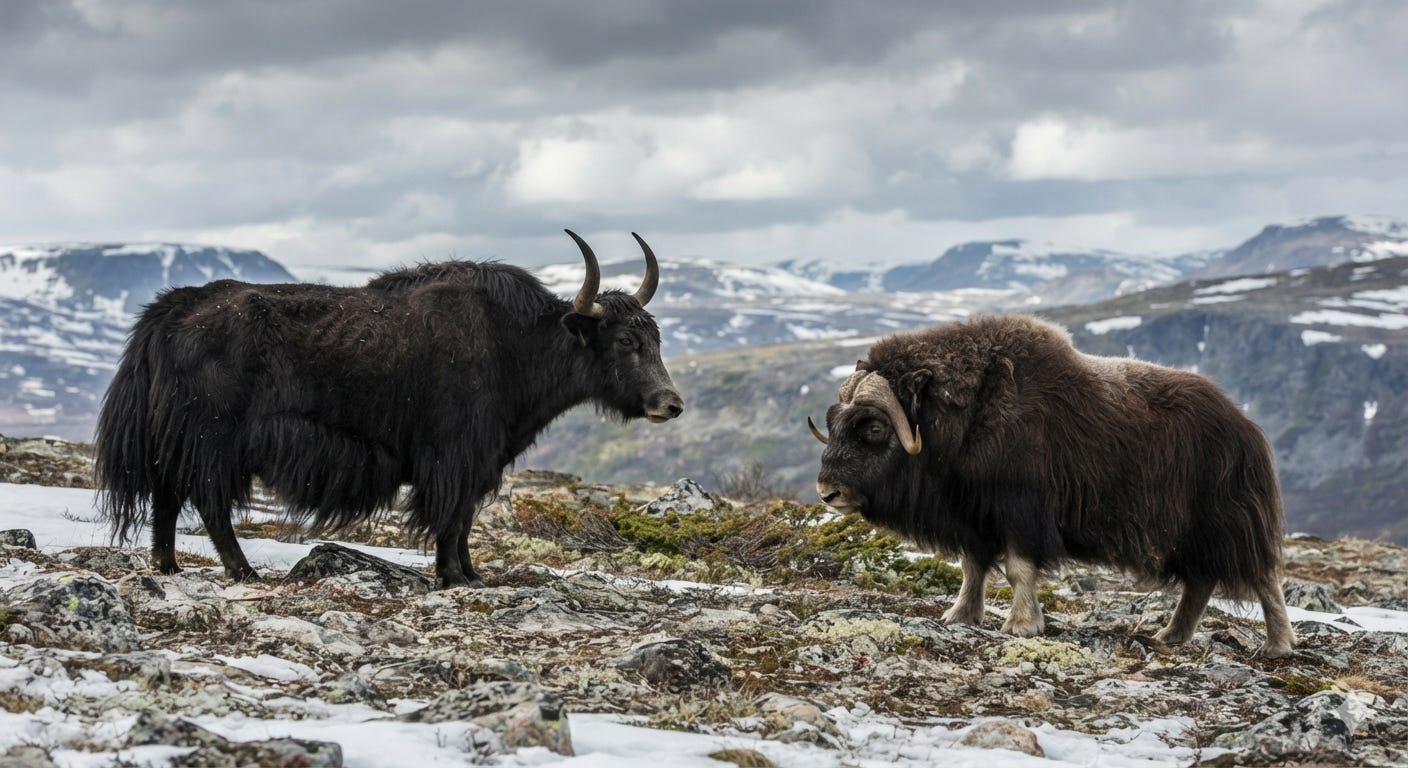
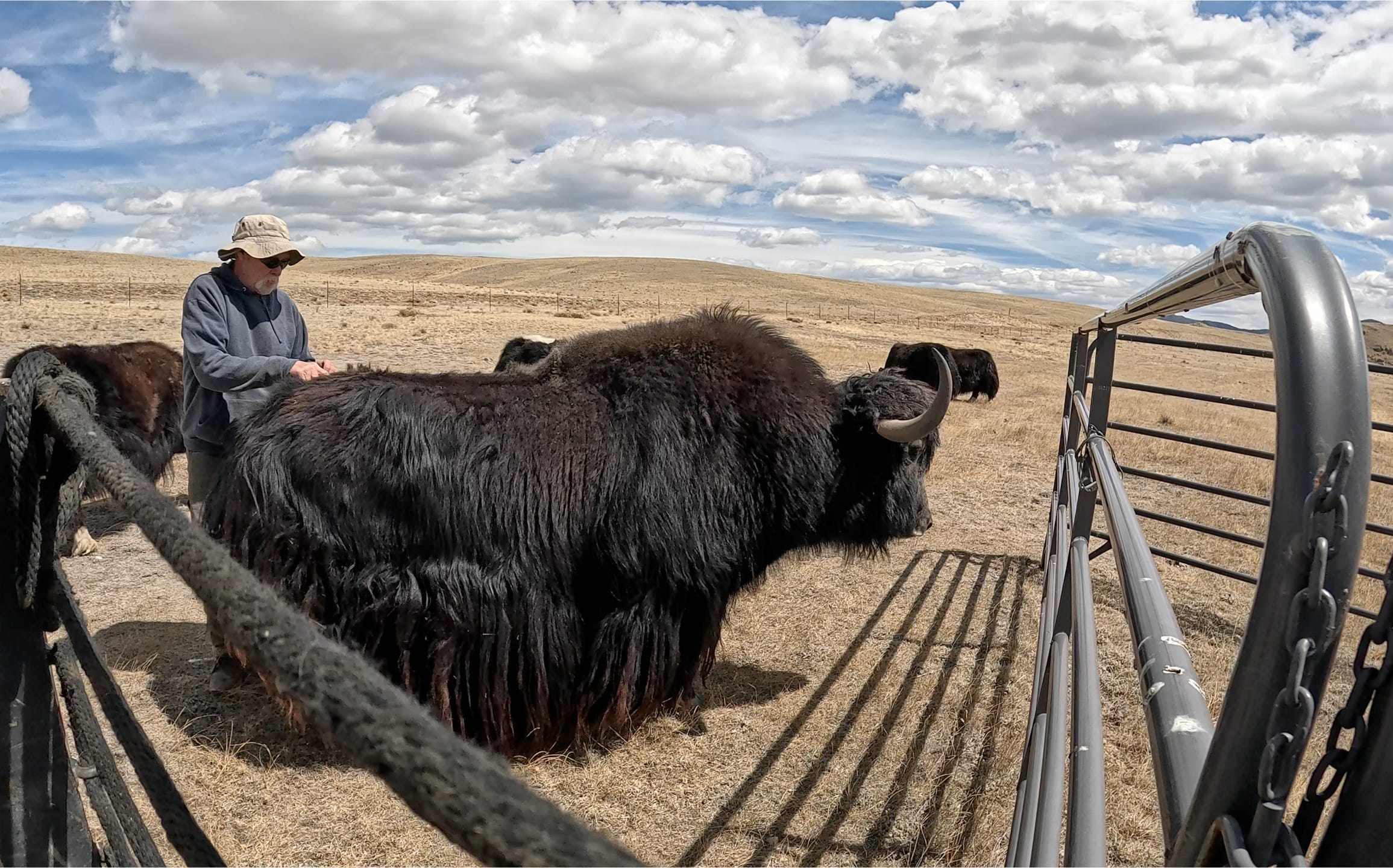
Yak down comes from the fine undercoat of Bos grunniens, the domestic yak raised primarily on the Tibetan Plateau, in Mongolia, and across the Himalayas. These animals grow a dense insulating layer to survive extreme cold and high altitudes. The down is typically collected by hand-combing during the spring molt, when the soft underwool naturally loosens. Higher-quality grades come from younger animals or carefully selected herds.
Qiviut (pronounced “kiv-ee-oot”) is the soft underwool of the muskox (Ovibos moschatus), a shaggy Arctic survivor found in Alaska, Canada, and Greenland. Muskoxen also shed their undercoat seasonally. Qiviut is gathered either by combing domesticated herds or, more frequently, collecting shed wool from the wild. The name originally referred more broadly to soft down in Inuit languages and is now used specifically for muskox underwool.
Both fibers are obtained without shearing in the traditional sense of sheep, which helps preserve the animals’ protective outer guard hairs.
Practical Differences: Care, Availability, and Cost
Care: The non-felting, non-shrinking nature of qiviut makes it relatively forgiving—hand washing is still recommended for knitted items, but it tolerates water temperatures better than many fine wools. Yak down benefits from gentle handling similar to cashmere, yet careful care is still essential to preserves longevity.
Availability and price: Qiviut is rare. Muskox populations are limited, and annual yields per animal are modest. High-quality pure qiviut garments (scarves, hats, sweaters) command premium prices—often hundreds of dollars for a single scarf—and pieces can last decades with proper care. Yak down is more widely available thanks to larger domestic herds in Asia. It remains a luxury fiber but is generally more accessible and less expensive than pure qiviut, positioning it as a strong alternative.
Uses: Both excel in next-to-skin or lightweight cold-weather garments—hats, scarves, sweaters, base layers, gloves, and luxury throws. The extreme warmth of qiviut makes it especially prized for Arctic or high-altitude conditions where minimal bulk is desired. Yak down performs excellently in everyday cold-climate clothing and is increasingly used in outdoor and lifestyle apparel for its balance of warmth, breathability, and durability.
Which Is “Better”?
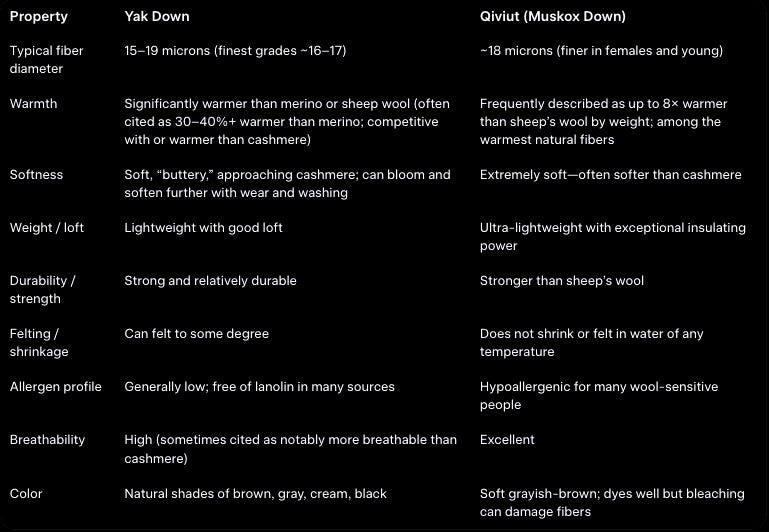
There is no universal winner. Qiviut offers maximum warmth per ounce, ultimate softness, and rarity matter most, and budget allows. Yet in our (biased) opinions, yak down provides excellent warmth and softness with greater availability, often better value, and strong durability for regular wear.
Both represent sustainable alternatives to more environmentally intensive fibers when sourced from well-managed herds. They showcase how animals adapted to harsh environments produce some of the most sophisticated natural insulators available.
But you’ve already known which one we’ll choose, right? :P