
Note: As we are still setting up various commercial fiber equipments and doing R&D on our next fiber products (stay tuned!!) Our newsletter publishing schedule might be impacted.. Thank you for your support and understanding!
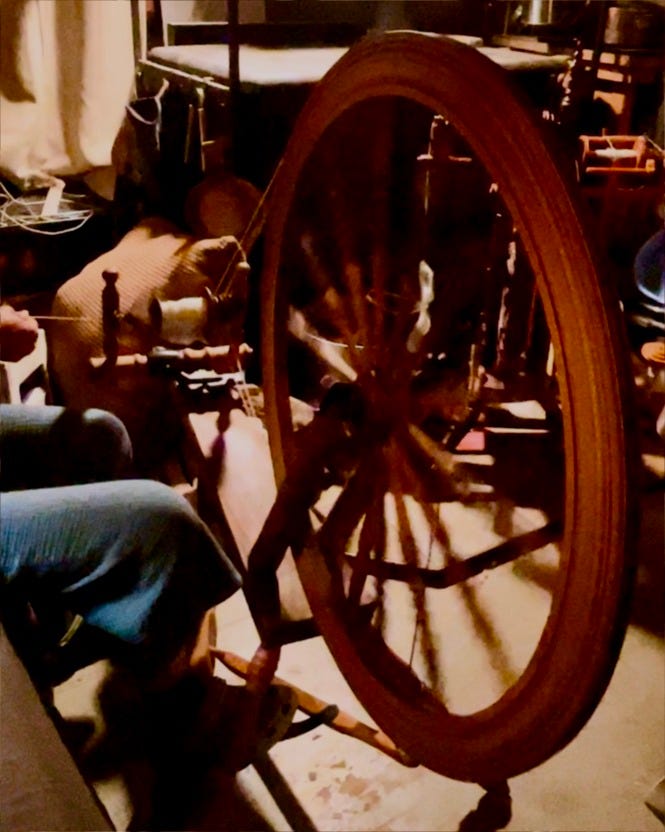
In a world of constant notifications, endless scrolling, and fragmented attention, many people are rediscovering old fiber crafts not just for the yarn or fabric they produce, but for the mental space they create. Two practices in particular—spinning fiber on a traditional wheel and wet felting—stand out as powerful, embodied forms of meditation and natural digital detox. Both demand presence, occupy the hands completely, and gently pull the mind away from screens and into the sensory present.
Spinning: Moving Stillness at the Wheel
Spinning fiber on a traditional wheel has long been described as “almost meditation.” The steady rhythm of the treadle, the soft pull of fiber through the fingers, and the quiet whir of the flyer create a loop of attention that feels both active and deeply calming. The hands know the work, so the mind can settle.
You anchor to the rhythm, expose yourself into the multi-sensory treat that orchestrate between you, your breathing, the fiber, and the wheel… At times it will be necessary to pause and make some adjustments or even deal with slight frustrations of stucked fiber. Yet just like people learning how to meditate, these are common themes that try to pull yourself back to live mindfully at the presence.
As a result, spinning is also an effective digital detox by design. Both hands are occupied. Looking at a phone requires stopping the work entirely. Many spinners deliberately leave devices in another room, treating time at the wheel as protected analog space. Over time, the usual itch to check messages often softens, both during and after the session.


Wet Felting: Embodied Rhythm and Sensory Immersion
Wet felting offers a complementary path to the same benefits, with a different texture of attention. Layers of wool are soaked with warm soapy water and then agitated—rubbed, rolled, or tossed—until the fibers interlock into fabric. The process is wetter, messier, and often more physically dynamic than spinning, yet equally absorbing.
Mindfulness techniques adapt easily. Anchor attention to one repeating motion (the back-and-forth rub or the roll in a mat). Check in with the senses and release bodily tension without stopping. Soften the breath and notice the urge to rush during the long “not yet” stage when the wool still feels fragile. Micro-pauses while adding hot water or turning the piece become moments of reset.
Like spinning, wet felting is inherently phone-repellent. Soapy, wet hands make screen use impractical. The mess itself becomes a boundary that protects focused time offline.
A Retreat to Analog Attention
In an age that constantly fragments attention, traditional fiber work offers something rare: a complete, absorbing activity that requires no screen, rewards slow noticing, and leaves both mind and hands quietly satisfied. Spinning and wet felting are not merely crafts. They are practical forms of meditation and digital detox available to anyone willing to sit (or stand) with wool, water, and time.
Many people find the two practices complementary. Spinning offers seated, finely rhythmic calm. Wet felting provides more vigorous, full-body engagement. Alternating between them can meet different needs—steady focus on some days, embodied release on others—while reinforcing the same underlying skills of presence and digital boundaries.
The wheel turns. The fibers lock. And for a while, the rest of the world can wait.