
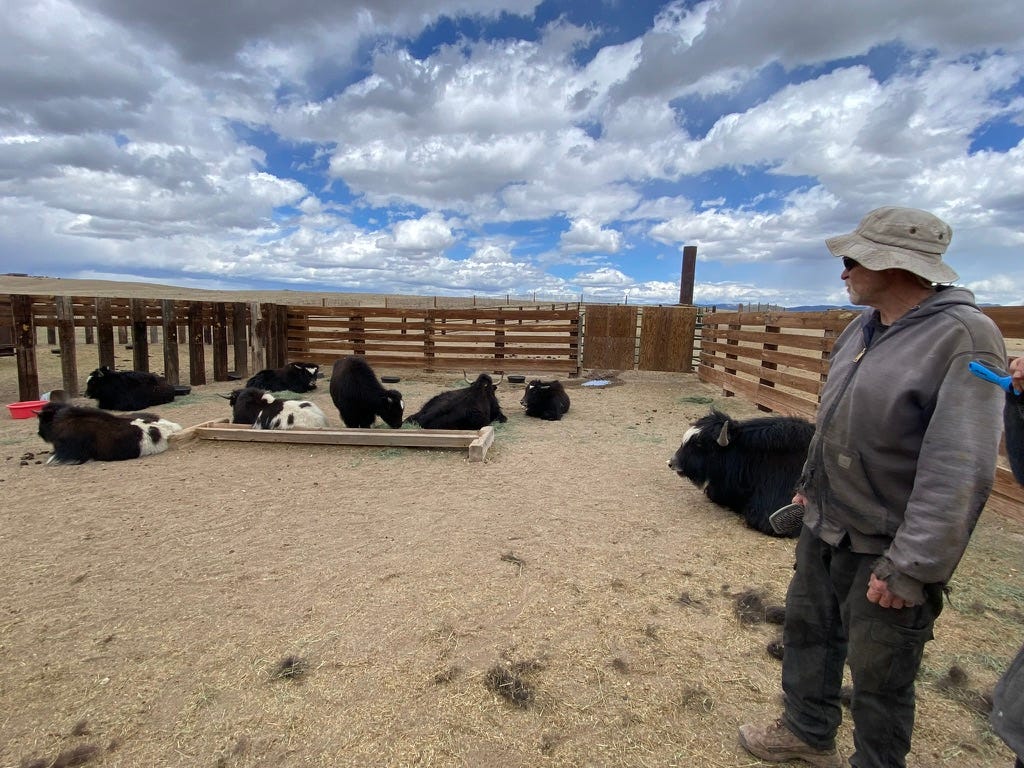
If you raise livestock in challenging terrain or simply want animals that deliver more while asking less, the answer is straightforward: you should have yaks.
Yaks consume less water and less grass than many conventional livestock. They turn sparse forage into usable energy without the heavy demands that can strain both land and resources. In environments where feed and water are limited, this efficiency alone makes them a practical choice.
They are approachable enough for daily handling, yet capable of protecting themselves against predators. More than that, they will help safeguard smaller livestock, reducing losses without constant human intervention or extra fencing. You get animals that work with you and also work for the rest of the herd.
From one species you gain multiple products. Lean, flavorful meat. Milk that can be made into butter, cheese, or other dairy staples. Fiber from both the soft undercoat and coarser outer hair that can be spun, felted, or sold. Few animals offer this range of returns while remaining so adaptable.
Yaks also serve as packing animals. Strong and sure-footed, they carry loads across steep or difficult ground, earning their place as both providers and reliable transport.
They are cold hardy by nature, thriving in thin air and freezing conditions that challenge other stock. Even their dung has value: dried, it becomes a renewable biofuel that has long provided clean-burning heat in high-altitude homes.
Taken together, these traits form a quiet argument against any livestock that you would chose instead. Efficiency in feed and water. Protection without constant intervention. Multiple products from one animal. Reliable packing power. Resilience in the cold, and fuel from what they leave behind. The list is not theoretical; it is the accumulated wisdom of the high places where yaks have long made sense.
Yes, you should have yaks.