In an era of tightening grain supplies, historically low cattle inventories, elevated energy costs, declining food quality, and persistent chemical contamination in everyday goods, self-sufficiency has shifted from idealistic slogan to practical necessity. Global systems that once appeared efficient have revealed their fragility. For those who raise multi-purpose livestock—animals that simultaneously deliver meat, fiber, and milk—the path forward is already underfoot.
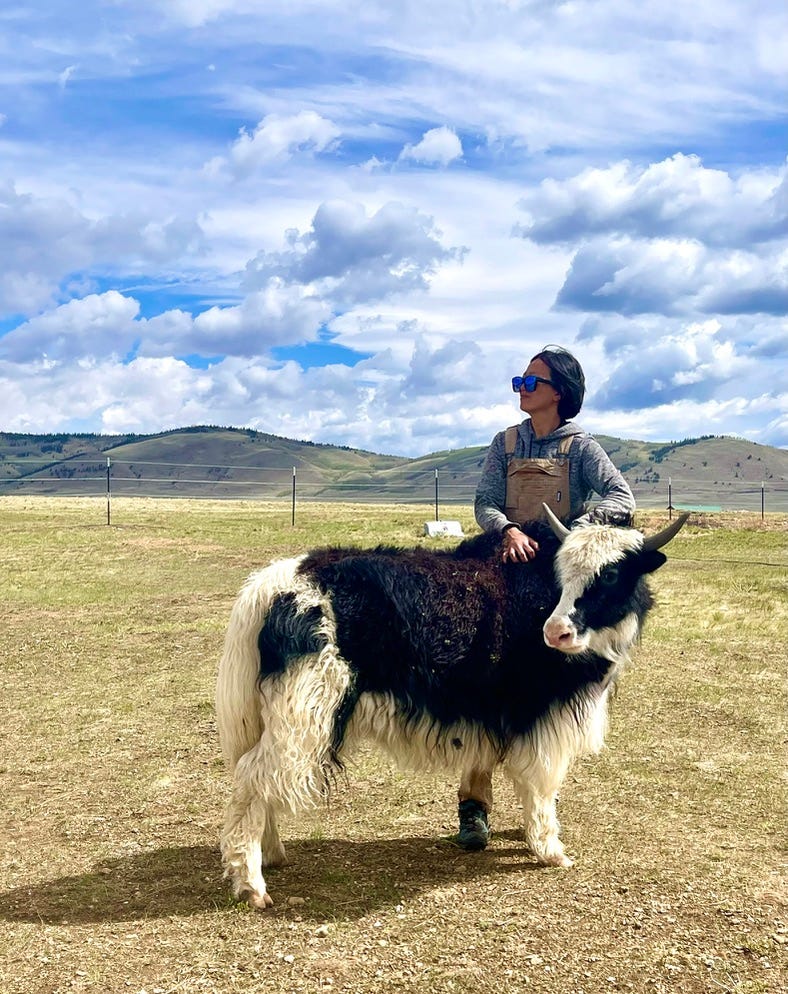
At The Dancing Yak Ranch, our yaks and sheep offers a concrete model of resilience that addresses several converging pressures at once. These animals convert marginal or high-altitude forage into high-value protein, natural fiber, and nutrient-dense dairy while requiring fewer external inputs than many industrial systems. The result is a form of localized production that reduces dependence on distant supply chains for both food and clothing materials.


Food System Pressures and the Case for Diversified Livestock
Global grain markets have moved into a period of tighter balances. Production forecasts for 2026/27 show declines from recent record highs in several major crops, with consumption exceeding output in key categories such as corn. Stocks among major exporters have thinned relative to use. At the same time, the U.S. cattle herd has remained near multi-decade lows. Beef cow numbers have contracted, calf crops have been smaller, and retail beef prices have reached elevated levels. Drought, high input costs, and slow herd rebuilding have all contributed.
These conditions do not signal immediate famine in wealthy countries, but they do increase volatility and raise the cost of industrial protein. Multi-purpose ruminants such as yaks and sheep provide an alternative pathway. Both species thrive on forage that is often unsuitable for intensive row-crop agriculture. Yaks, in particular, are adapted to harsh environments and convert coarse vegetation efficiently. Sheep can utilize a wide range of pastures and browse. Their meat and milk therefore represent calories and nutrients produced with lower reliance on grain-heavy feed systems that compete with human food supplies.
Milk from these animals further diversifies the nutritional output. Sheep milk is denser in solids and nutrients than typical cow milk; yak and sheep milk has long supported high-altitude populations. On a farm oriented toward multi-purpose production, the same animals can supply meat for direct consumption or local markets, dairy products with longer shelf life or value-added potential, and a buffer against price spikes in conventional beef or dairy channels. This is not isolation—it is strategic capacity. Trade and specialization remain valuable for variety and efficiency, but a domestic floor of essential protein and dairy reduces exposure to external shocks.
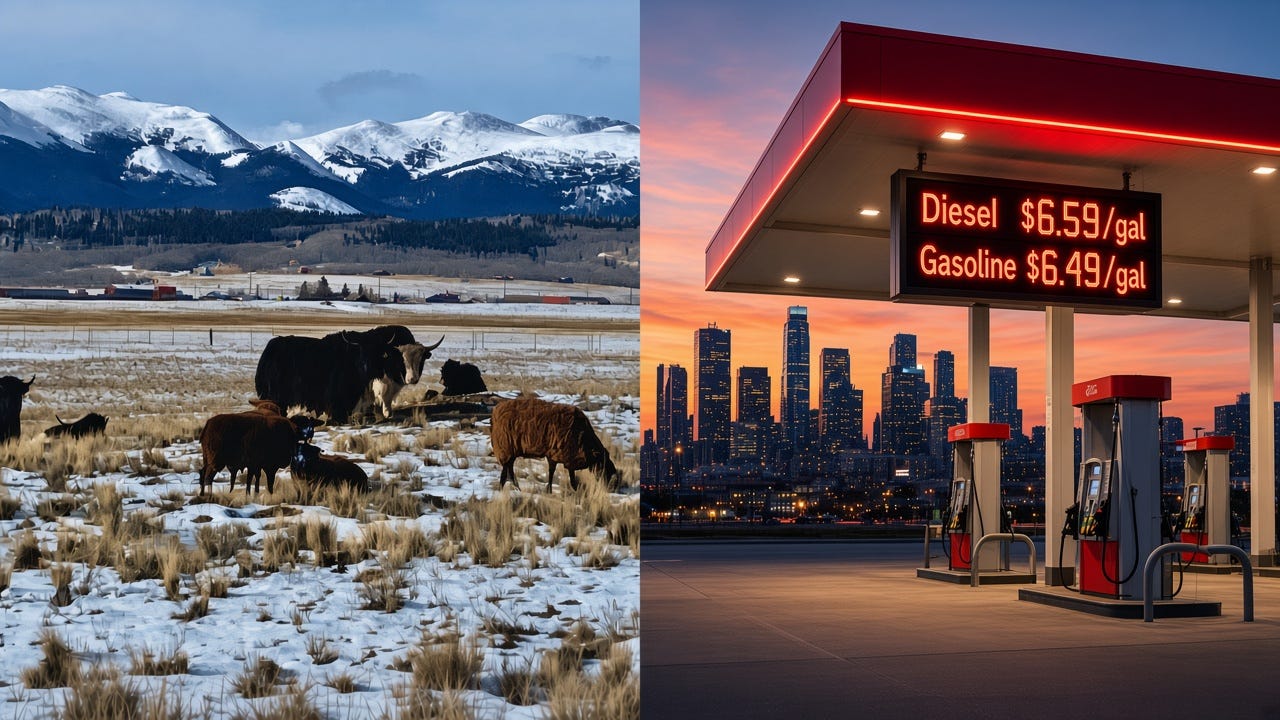
Energy costs amplify the advantage. Record diesel prices in 2026 have raised the expense of harvesting, transporting, and processing crops and livestock. Operations that emphasize grazing, local processing, and minimal long-haul movement of animals or feed are less exposed to these spikes. Fertilizer and fuel-linked input costs that pressure grain and feedlot systems weigh less heavily on well-managed forage-based herds.


Fiber as Resilience: Natural Alternatives to Chemically Treated Textiles
Self-sufficiency does not stop at the plate. Clothing and household textiles have become another vector of chemical exposure. PFAS used for water- and stain-repellent finishes, and lead in coloring dyes, persist in the environment and human body. Testing has shown progress in jurisdictions with strong bans—California and New York restrictions on intentionally added PFAS in apparel have driven measurable reductions in many products—but residual presence continues in some outdoor gear, athletic wear, and fast-fashion items. Lead compounds have appeared in dyes and mordants, particularly in brightly colored children’s and discount clothing, sometimes exceeding regulatory thresholds for lead content. Other textile chemicals, including certain azo dyes, phthalates, and halogenated compounds, migrate through wear and washing.
Natural fibers from sheep (wool) and yaks (soft undercoat fiber) offer a direct counter to this pattern. Properly processed wool and yak fiber require no PFAS coatings for basic performance. They provide insulation, moisture management, and durability without the “forever chemical” profile. A multi-purpose farm that shears and processes its own fiber—or partners with local mills—shortens the supply chain dramatically. The same animals that supply meat and milk also produce material that can become clothing, blankets, or insulation with far greater transparency over chemical inputs.
Global textile production still relies heavily on long, opaque chains for both natural and synthetic fibers, finishes, and dyes. Many of those products carry residual PFAS for water or stain resistance, lead compounds used as mordants or pigments in some low-cost dyeing, and other additives that accumulate through skin contact and laundry cycles. When a farm produces its own fiber, processes it with minimal chemical intervention, and turns it into garments or insulation, those exposures are eliminated or sharply reduced. More importantly, the material remains available even if shipping, trade restrictions, or energy-driven cost spikes interrupt conventional clothing supply.
Conclusion: Strategic Capacity, not Isolationist
None of this requires total isolation. Comparative advantage and open trade continue to deliver variety, innovation, and cost efficiencies in non-critical goods. The appropriate balance is strategic self-sufficiency: maintain domestic or closely allied capacity for essentials that are difficult to substitute quickly and costly when disrupted, while remaining open to trade elsewhere.
The pressures of the mid-2020s—tightening grains, contracted cattle herds, costly energy, ultra-processed diets, and chemical loads in clothing—point in the same direction. Systems optimized solely for short-term efficiency have left too little margin for disruption. Multi-purpose yak and sheep farming addresses several of these pressures simultaneously by delivering meat, milk, and natural fiber from animals adapted to challenging environments and lower external inputs.